
Today, Quality, Safety, and Regulatory Compliance are the buzzwords in the pharmaceutical industry. As healthcare sector regulations are becoming stringent in many parts of the world, manufacturers cannot compromise in ensuring each of their products are made according to the prevailing standards. WHO-GMP Certification is the most acclaimed quality system for pharmaceuticals and refers to that manufacturing facilities are continually practicing a consistent and stringent standard of production that ensures adequate medicines and Active Pharmaceutical Ingredients are manufactured and quality-controlled to internationally recognized standards. WHO-GMP Certification means the company is compliant with international quality standards to operate worldwide, whether for APIs, Formulation products or specialty pharmaceutical ingredients
What is WHO-GMP Certification?
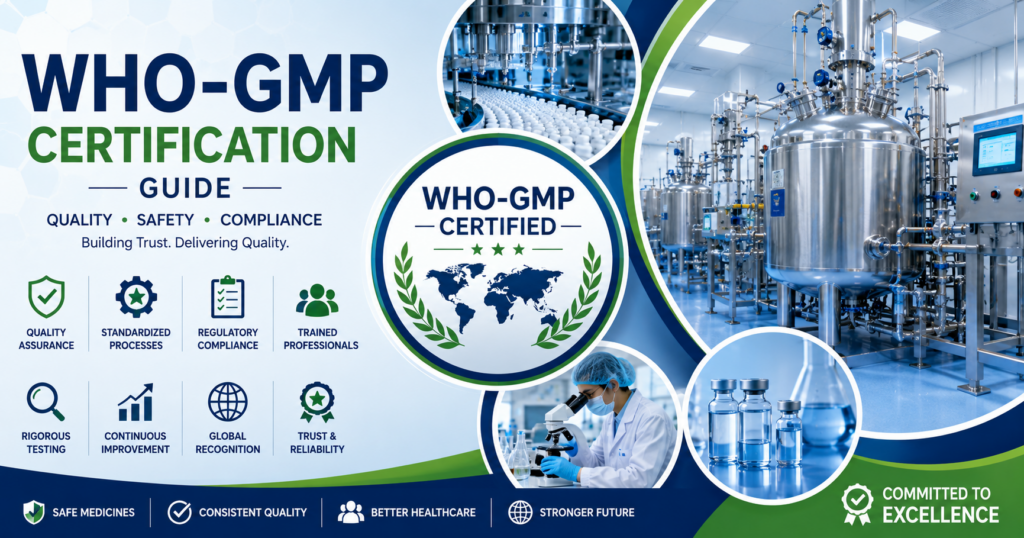
WHO-GMP refers to the World Health Organization – Good Manufacturing Practices. It is a global standard or quality system intended for any pharmaceutical product in order to guarantee its safe manufacturing and consistent control according to the predetermined standards and quality criteria. The overall WHO-GMP aims at reducing any risk to drug products, that may be generated by inadequate process control, cannot be eliminated or detected by a laboratory test.
For instance, contamination, errors in labeling, cross-contamination, mistakes in product quality, manufacturing procedures and inconsistency.
In contrast to the normal manufacturing standard, the WHO-GMP lays emphasis on the pharmaceutical production, encompassing a range of operations from sourcing the raw materials through packaging, storage and delivery. Producers implementing these practices put in place systems and processes for the safety and effective quality of the drugs manufactured.
Why WHO-GMP Certification Matters
The Quality of pharmaceutical products can be never compromised since their use directly effects the well being of human life. To maintain a healthy population and standard practice, the companies have been producing effective and safe pharmaceutical products, and to showcase that, they undergoWHO-GMP certification. This certification provides an organization a confirmation that they have followed the required guidelines set by regulatory authorities.
Manufacturers certified with WHO-GMP benefit from the enhanced quality standards of manufacturing, the robustness of their quality systems, and the improved trust from their customers. Most of pharmaceutical purchasers, health bodies, and international distribution channels favour the sourcing of product from a WHO-GMP–certified producer since such a certificate highlights the adherence to excellent operational practices and high standards of quality. WHO-GMP Certification is also useful in encouraging export of pharmaceutical product since they are aligned with the quality expectations of various countries and it boosts brand recognition.
Benefits of WHO-GMP Certification
Obtaining WHO-GMP Certification provides several advantages for pharmaceutical manufacturers.
Improved Product Quality
Standardized manufacturing procedures reduce variability and ensure consistent product quality across every production batch.
Enhanced Patient Safety
Strict quality control systems minimize contamination risks and manufacturing errors, helping deliver safer pharmaceutical products to patients.
Better Regulatory Compliance
WHO-GMP-certified facilities are better prepared for regulatory inspections and customer audits because they maintain comprehensive documentation and validated processes.
Stronger Market Reputation
Certification demonstrates a manufacturer’s commitment to quality, making the company more attractive to domestic and international customers.
Increased Export Opportunities
Many international buyers prefer working with manufacturers that follow WHO-GMP guidelines, making certification an important factor in expanding global business.
Continuous Improvement
WHO-GMP encourages manufacturers to regularly evaluate and improve their quality management systems, ensuring long-term operational excellence.
WHO-GMP Certification Process
Achieving WHO-GMP Certification requires careful planning, documentation, validation, and continuous monitoring. Although the exact process may vary depending on regulatory authorities, the overall approach remains similar.
Initial Gap Assessment
Manufacturers begin by reviewing existing facilities, equipment, documentation, and quality systems to identify areas requiring improvement.
Documentation Development
Comprehensive documentation forms the foundation of WHO-GMP compliance. Standard Operating Procedures (SOPs), Batch Manufacturing Records (BMRs), specifications, validation reports, and quality manuals must be properly prepared and maintained.
Facility Design and Infrastructure
Manufacturing areas should be designed to prevent contamination, ensure smooth material flow, and maintain appropriate environmental conditions. Clean production areas, proper ventilation, and controlled access contribute to product quality.
Equipment Qualification
All manufacturing equipment must be installed, calibrated, qualified, and regularly maintained to ensure reliable performance throughout production.
Process Validation
Manufacturing processes are validated to demonstrate that they consistently produce products meeting predetermined quality specifications. Validation helps reduce production variability and improves manufacturing reliability.
Quality Control Laboratory
A modern quality control laboratory performs analytical testing on raw materials, in-process samples, and finished products. Validated testing methods ensure accurate and reliable analytical results.
Employee Training
Employees receive regular training on GMP principles, hygiene practices, documentation procedures, quality systems, and operational responsibilities. Well-trained personnel are essential for maintaining compliance.
Internal Audits
Routine internal audits help identify potential compliance gaps before external regulatory inspections. Audit findings are documented, reviewed, and corrected through systematic improvement programs.
Key WHO-GMP Requirements
Successful WHO-GMP implementation requires manufacturers to maintain strong quality systems throughout every stage of production.
Important requirements include:
- Comprehensive quality management systems
- Controlled manufacturing environments
- Raw material inspection and approval
- Validated production processes
- Equipment calibration and maintenance
- Proper documentation practices
- Batch traceability
- Laboratory testing
- Packaging controls
- Warehouse management
- Environmental monitoring
- Personnel hygiene
- Complaint handling procedures
- Product recall systems
- Change control management
- Corrective and Preventive Actions (CAPA)
Together, these elements create a structured manufacturing environment that ensures pharmaceutical products consistently meet quality, safety, and regulatory expectations.

Maintaining WHO-GMP Compliance
Getting a WHO-GMP certificate is the initial milestone; what follows next is the responsibility of the manufacturing company to maintain compliance. Regular monitoring, audits, staff training, machinery maintenance, review of records, and improvement processes will be a prerequisite to the certification to ensure the product’s quality and its continuous development. Those companies with an established culture of quality will take WHO-GMP not only as a certification, but a philosophy for Manufacturing Quality in perpetuity and continuous improvement initiatives make it possible for the organizations to stay ahead of the curve while staying competitive in the market.
WHO-GMP Certification and API Manufacturing
For Active Pharmaceutical Ingredient (API) producers, WHO-GMP certification highlights their commitment to manufacturing best practices. The efficacy of the finished pharmaceutical depends on the consistent and high-quality manufacture of API, as the API forms the heart of the formulation. Variations in API quality could affect the final medicine’s ability to meet its expected performance and profile, hence the need for tighter controls in manufacturing.
An API producer who is WHO-GMP certified works through documented processes from the sourcing of the initial materials to packaging and storing finished products. The manufacturing processes undergo rigorous process control and monitoring of each unit in terms of quality by having well-defined SOPs (Standard Operating Procedures) and testing procedures and having an effective QA/QC system in place. These practices greatly reduce possibilities of contamination, cross-contamination, mixes, quality discrepancies etc.
Pharmaceutical drug manufacturers often seek a WHO-GMP-certified API partner. These suppliers have the assurance of compliance with internationally acceptable standards of quality and reduce the qualification burden. It assists with regulatory filing and reassures regulatory authorities, physicians, and patients.
Common Challenges During WHO-GMP Certification
Obtaining WHO-GMP Certification requires significant planning, investment, and continuous improvement. Many manufacturers face challenges during the certification process, including:
Documentation Management
Maintaining accurate Standard Operating Procedures (SOPs), Batch Manufacturing Records (BMRs), validation reports, and quality manuals requires dedicated quality teams and regular updates.
Process Validation
Manufacturers must prove that every production process consistently delivers products meeting predefined quality specifications. Validation activities can be time-consuming but are critical for regulatory compliance.
Employee Training
GMP compliance depends heavily on trained personnel. Regular training programs ensure employees understand quality systems, hygiene practices, documentation requirements, and operational procedures.
Equipment Qualification
Manufacturing and laboratory equipment must be installed, calibrated, maintained, and periodically qualified to ensure reliable performance throughout their lifecycle.
Data Integrity
Regulatory authorities increasingly emphasize accurate, secure, and traceable documentation. Companies must establish robust systems that ensure all manufacturing and laboratory data are complete, accurate, and readily available during inspections.
Continuous Improvement
Maintaining certification requires ongoing internal audits, corrective actions, preventive measures, and process improvements to address changing regulations and evolving industry expectations.
Best Practices for Maintaining WHO-GMP Compliance
Successful manufacturers approach WHO-GMP not as a destination but a journey. Here are some of the best practices:
- Conduct frequent internal GMP audits.
- Ensure your records are updated and well-organized.
- Calibrate and service equipment on a routine basis.
- Regularly review manufacturing process for improvements.
- Conduct risk assessments before making changes.
- Improve quality assurance and quality control functions.
- Train employees on new or updated GMP.
- Ensure complete traceability for batches and products.
- Monitor your environment on the production floor.
- Use robust CAPA.
Why Choose Prism Industries Pvt. Ltd.?
Prism Industries Pvt. Ltd. – Leading API Manufacturer in India With decades of experience, Prism Industries is a distinguished name in the pharmaceutical landscape, serving as a trusted API manufacturer in India, dedicated to maintaining the highest benchmarks of quality, innovation, and regulatory adherence. The company boasts over three decades of proven experience in the pharmaceutical manufacturing arena, catering to a global clientele with a wide spectrum of high-quality Active Pharmaceutical Ingredients (APIs).
Prism Industries’ manufacturing facilities, which have received WHO-GMP certification, operate under a meticulously developed and robust quality management system.
This system guarantees uniformity, integrity, and consistent reliability of all pharmaceutical products. The company has invested significantly in advanced analytical laboratories, well-documented and validated production processes, and highly experienced professionals, all of which collectively facilitate exceptional product quality at every production phase. The focus on continual quality advancement at Prism Industries ensures that each batch produced rigorously conforms to the established international pharmaceutical standards. Supported by modern infrastructure, comprehensive quality assurance protocols, and a strong commitment to customer satisfaction, Prism Industries efficiently meets the requirements of pharmaceutical corporations with steadfast and technically superior products and assistance.
Furthermore, the company excels in offering reliable global supply chain solutions, detailed regulatory documentation support, in-depth technical expertise, and personalized customer care, solidifying its position as the favored choice for pharmaceutical enterprises worldwide looking for quality APIs and unwavering supplier dependability.
Conclusion
Industry has been setting new quality expectations and demanding better quality products, better manufacturing consistency and better regulatory compliance from drug makers. WHO-GMP Certification is now a mandatory quality certification required by pharmaceutical companies who want to play a major role in the local or international market. In effect, the certification represents the fact that the company is committed to supplying the public with quality medications using efficient manufacturing standards and effective quality management system.WHO-GMP Certification for API Manufacturers WHO-GMP Certification for API manufacturers builds credibility, trust, and access to global pharmaceutical markets.
Implementing rigorous quality management systems, well-designed processes, valid tests, and effective control systems ensures reliable manufacturing of WHO-GMP-compliant pharmaceuticals that meet international quality expectations.
Prism Industries Pvt. Ltd. Adheres to the highest WHO-GMP standards when producing quality pharmaceutical API for the world and this tradition for many decades now means that the company has the manufacturing excellence to produce these APIs in a compliant manner and to supply them around the world with utmost regulatory compliance and security.
At Prism Industries Pvt. Ltd., we are proud to support such efforts by providing trusted, compliant APIs to innovators in the global pharmaceutical space.
To explore quinine for advanced therapeutic research, contact us today at www.prisminltd.com.
Contact us at www.prisminltd.com/contact to learn more or request a product sample.
Explore Our Products: https://prisminltd.com/products/
Follow us on:
Facebook: https://www.facebook.com/profile.php?id=61559713707912&is_tour_dismissed
Twitter: https://x.com/prismindltd
Linkedin: https://www.linkedin.com/in/prism-industries-589771309/
Instagram : https://www.instagram.com/prism2241
FAQs:
The WHO-GMP Certification guarantees that the facility which manufactures medicines adheres to the world’s most recognized guidelines for Good Manufacturing Practice established by the World Health Organization, assuring the quality, safety, and efficacy of the finished goods.
This tells us APIs are manufactured using international standards that will provide a higher quality, more regulatory compliant, safer and trusted API to the consumer.
Timeline: Depending on the availability, readiness, infrastructure and successful inspection of documentation it may take a few months to complete the process.
Yes Most of the overseas clients & regulatory authorities like the APIs & Pharmaceutical products obtained from WHO-GMP certification for its standard & compliance with accepted standard of quality.
At Prism Industries Pvt. Ltd., the pharmaceutical sector benefits from world-class facilities that encompass the standards of WHO-GMP certification and more than 30 years of expertise. We ensure consistently high-quality output with a technologically robust quality control lab, compliance support through proper regulatory documentation and an impeccable track record of timely global supply.