
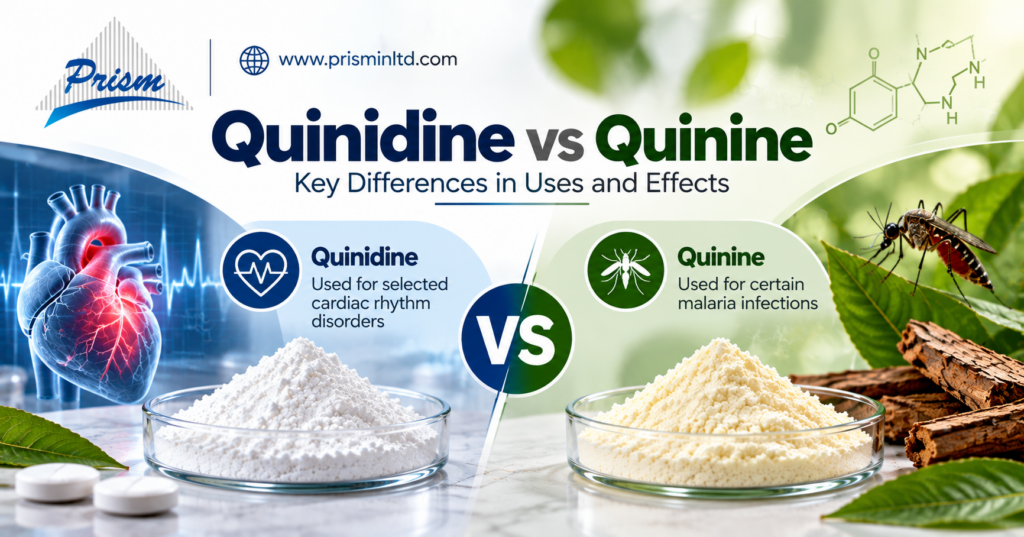
Quinidine vs Quinine is an important comparison in pharmaceutical science because these two related alkaloids have different medical applications, safety considerations, and quality requirements. Although both compounds are associated with the cinchona plant, they are not interchangeable medicines.
Quinine has a historical role in malaria treatment, while quinidine has been used as an antiarrhythmic medicine to manage certain abnormal heart rhythms. Understanding their differences helps pharmaceutical buyers, healthcare professionals, and API industry participants distinguish their intended uses, specifications, and manufacturing requirements.
For companies working with active pharmaceutical ingredients (APIs), the distinction also matters when reviewing product identity, pharmacopoeial standards, analytical methods, and documentation.
What Is the Difference Between Quinidine and Quinine?
The main difference lies in their pharmacological actions and therapeutic applications. Both are naturally occurring cinchona alkaloids with closely related chemical structures, but differences in molecular arrangement contribute to their distinct effects in the body.
Feature | Quinidine | Quinine |
Compound type | Cinchona alkaloid | Cinchona alkaloid |
Main pharmacological role | Antiarrhythmic activity | Antimalarial activity |
Principal action | Alters electrical conduction in the heart | Acts against malaria parasites |
Key application | Selected cardiac rhythm disorders | Treatment of certain malaria infections |
Major safety concern | QT prolongation and potentially serious arrhythmias | Cinchonism and other adverse effects |
Pharmaceutical relevance | Cardiac medicines and related API quality control | Antimalarial medicines and related API quality control |
Both substances require careful identification and appropriate quality testing. Their shared botanical origin does not mean they have the same clinical purpose.
1. What Is Quinidine?
Quinidine is a cinchona alkaloid classified as a Class IA antiarrhythmic agent. It affects the movement of electrical signals through cardiac tissue, helping to interrupt or prevent certain abnormal heart rhythms.
Medical uses of quinidine
Quinidine has been used in selected cases of atrial fibrillation, atrial flutter, and other arrhythmias. Its use is now limited by safety concerns and the availability of alternative treatments. The appropriate role of quinidine depends on the patient’s condition and current clinical guidance.
Effects and safety considerations
Quinidine can prolong the QT interval on an electrocardiogram. In some patients, this may lead to dangerous ventricular arrhythmias, including torsades de pointes. Other potential effects include gastrointestinal discomfort, dizziness, low blood pressure, and interactions with other medicines.
For this reason, quinidine treatment requires specialist oversight, appropriate cardiac monitoring, and consideration of electrolyte levels and drug interactions. It is not a medicine for self-treatment.
2. What Is Quinine?
Quinine is another cinchona alkaloid with established antimalarial activity. It has a long history of use against malaria caused by Plasmodium parasites.
Quinine for malaria treatment
Quinine for malaria treatment has historically been an important therapeutic option, particularly in settings where other antimalarial medicines were unavailable. It acts against susceptible malaria parasites during their blood-stage infection.
However, its current use depends on the parasite species, geographic region, resistance patterns, disease severity, and available medicines. For example, current US Centers for Disease Control and Prevention guidance generally prefers artemether-lumefantrine for uncomplicated malaria. Quinine sulfate combined with another appropriate medicine remains an alternative in specific circumstances. Severe malaria requires urgent treatment, with intravenous artesunate recommended in US guidance.
The phrase malaria drug quinine therefore describes an established pharmaceutical application, but it should not be interpreted as meaning quinine is the preferred treatment for every malaria infection.
Effects and safety considerations
Quinine can cause cinchonism, a group of adverse effects that may include:
- Ringing in the ears and hearing disturbances.
- Headache, dizziness, and nausea.
- Visual disturbances.
- Gastrointestinal discomfort.
More serious reactions can also occur, including low blood glucose, blood-cell abnormalities, and cardiac effects. Treatment decisions and monitoring should be guided by qualified healthcare professionals.
3. Quinidine vs Quinine: How Their Effects Differ
Although the compounds are structurally related, they interact with different biological targets in ways that explain their distinct uses.
Quinidine affects cardiac ion channels, particularly sodium channels, and influences electrical conduction and repolarization. These effects can help control selected arrhythmias, but they can also create a risk of abnormal heart rhythms.
Quinine, by contrast, interferes with processes that malaria parasites use to survive inside red blood cells. Its therapeutic effect is directed toward the parasite rather than primarily toward the heart’s electrical conduction system.
The distinction is especially important when discussing pharmaceutical development. A compound’s therapeutic role depends on its pharmacological properties, not simply on its chemical family or botanical source.
4. Manufacturing and Quality Considerations for Both APIs
For pharmaceutical manufacturers and procurement teams, comparing quinidine and quinine involves more than understanding their clinical applications. Each active pharmaceutical ingredient requires appropriate controls for identity, purity, impurities, and batch consistency.
Raw materials and product identity
Both compounds are associated with cinchona alkaloid chemistry. Depending on the manufacturing route, the process may involve botanical extraction, purification, or other suitable production methods.
Manufacturers must establish the identity of the intended alkaloid and distinguish it from related compounds. This is particularly relevant when working with mixtures of cinchona alkaloids or materials obtained from botanical sources.
Analytical testing and specifications
Quality control should be based on the applicable product specification and current regulatory requirements. Depending on the product and relevant pharmacopoeia, testing may include:
- Identity testing: Confirms that the material is the specified alkaloid.
- Assay: Measures the active compound’s content.
- Related substances: Evaluates specified impurities and related alkaloids.
- Residual solvents and other contaminants: Assesses risks associated with the manufacturing process.
- Physical and chemical characteristics: Verifies relevant parameters such as appearance, moisture content, and other specified properties.
Methods and acceptance limits should follow the applicable monograph, approved specification, and regulatory commitments. Requirements may differ by market and product form, so current documentation should always be verified.
Documentation and supplier evaluation
When sourcing quinidine or quinine APIs, buyers should review the certificate of analysis (CoA), manufacturing and testing information, traceability, and applicable GMP documentation.
A CoA should be assessed against the approved specification rather than treated as a substitute for supplier qualification. Buyers should also verify the manufacturing site’s regulatory status and the documentation needed for the intended destination market.
For Prism Industries Pvt. Ltd. and other companies operating in the pharmaceutical ingredients sector, clear product identification and accurate technical documentation are relevant to responsible API sourcing and supply.
5. Why Quinidine and Quinine Are Not Interchangeable
The names are similar, and their chemical relationship can cause confusion. However, replacing one with the other would be medically inappropriate.
- Different indications: Quinidine has antiarrhythmic applications, whereas quinine has antimalarial applications.
- Different pharmacological effects: Their biological actions and therapeutic objectives are distinct.
- Different risk profiles: Their adverse effects, contraindications, and monitoring requirements differ.
- Different product specifications: API identity, assay requirements, impurities, and other quality attributes must be evaluated for the specific compound.
Neither compound should be selected solely because it belongs to the same alkaloid family as the other. Medical use requires a suitable diagnosis and professional prescribing.
Conclusion:
The comparison of quinidine vs quinine demonstrates how closely related pharmaceutical compounds can serve very different purposes. Quinidine has a role in selected cardiac rhythm disorders, while quinine has an established history in malaria treatment, although modern antimalarial choices depend on clinical circumstances and current guidelines.
For pharmaceutical professionals, the distinction reinforces the need for accurate API identification, validated analytical testing, suitable manufacturing controls, and reliable quality documentation.
To learn more about cinchona-derived pharmaceutical ingredients, review relevant pharmacopoeial standards and consult qualified technical professionals when evaluating product specifications or sourcing requirements.
Medical information in this article is educational and does not replace current clinical guidance or advice from a qualified healthcare professional.
At Prism Industries Pvt. Ltd., we are proud to support such efforts by providing trusted, compliant APIs to innovators in the global pharmaceutical space.
To explore quinine for advanced therapeutic research, contact us today at www.prisminltd.com.
Contact us at www.prisminltd.com/contact to learn more or request a product sample.
Explore Our Products: https://prisminltd.com/products/
Follow us on:
Facebook: https://www.facebook.com/profile.php?id=61559713707912&is_tour_dismissed
Twitter: https://x.com/prismindltd
Linkedin: https://www.linkedin.com/in/prism-industries-589771309/
Instagram : https://www.instagram.com/prism2241
FAQs:
Quinidine is an antiarrhythmic medicine used in selected cases of abnormal heart rhythms, while quinine is an antimalarial compound used to treat certain malaria infections.
No. Both are closely related cinchona alkaloids, but they have different pharmacological properties, therapeutic applications, and safety profiles. They are not interchangeable.
Quinine is used in specific circumstances to treat malaria caused by susceptible Plasmodium parasites. Its use depends on current treatment guidelines, the infection, and available alternatives.
Quinidine has been used to manage certain abnormal heart rhythms. Because it can cause serious cardiac side effects, its use requires careful medical assessment and monitoring.
Yes, quinine remains an option in selected circumstances. However, other antimalarial medicines are preferred for many infections. Treatment should follow current clinical guidelines and medical advice.
Quinidine can cause QT prolongation and potentially dangerous arrhythmias. Quinine may cause cinchonism, including ringing in the ears, headache, nausea, and visual disturbances. Both can cause serious adverse reactions
Both occur naturally among the alkaloids associated with the Cinchona genus. Their shared botanical origin does not mean they have identical effects or medical uses.
Manufacturers use appropriate identity tests, assay methods, impurity profiling, and other specification-based quality checks. Testing requirements depend on the applicable pharmacopoeial monograph and regulatory market.
Buyers should review the certificate of analysis, product specifications, impurity limits, batch traceability, manufacturing controls, and applicable GMP documentation. Requirements should be verified for the intended market.
The comparison helps distinguish two related alkaloids with different therapeutic purposes. For API manufacturers and procurement teams, correct identification, suitable testing, and accurate documentation are essential to product quality and regulatory compliance.